


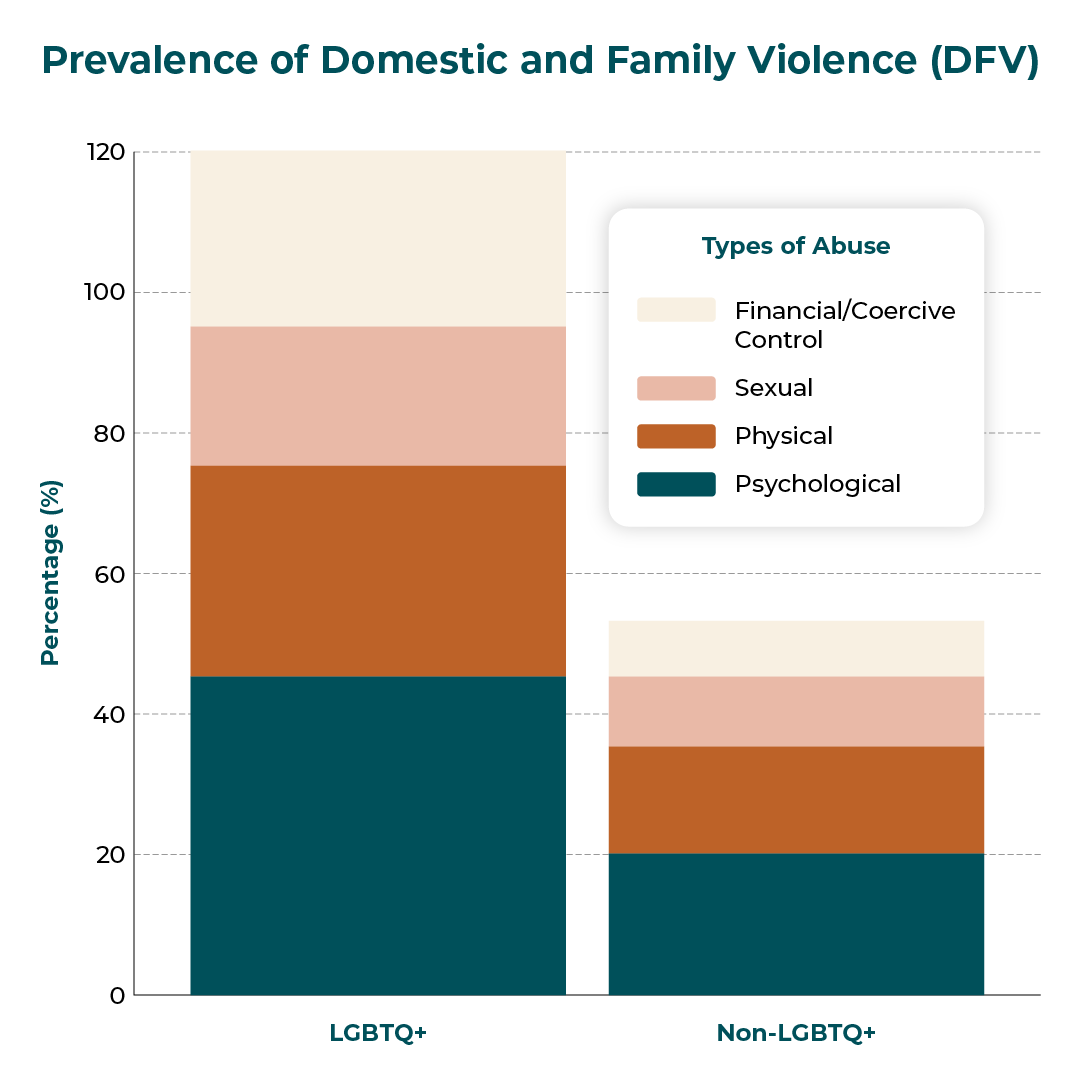
Domestic and family violence (DFV) does not discriminate. It can happen to anyone, regardless of sexuality, gender, or background. For LGBTIQA+ communities, the statistics are alarming and yet remain under-recognised.
The statistics
- More than 60% of LGBTQ+ people will experience domestic, family, or intimate partner violence in their lifetime
- 72% of LGBTQ+ people who experienced abuse did not report it to anyone
- Psychological and emotional abuse are the most common, but physical, sexual, financial, and identity-based abuse are also widespread.
Domestic violence - the bigger picture
- 1 in 3 women worldwide experience physical or sexual violence in their lifetime.
- In Australia, 1 in 6 men have experienced emotional abuse by a partner.
- DFV is the leading cause of homelessness for women and children.
- Abuse is not always physical, coercive control, isolation, financial restriction, manipulation, and threats can be equally devastating.
For LGBTQ+ survivors, these experiences are compounded by barriers such as fear of discrimination, lack of LGBTQ+ inclusive services, or being silenced through threats of being ‘outed.’
Warning signs - what to look out for Friends, families, and workplaces can be lifelines. Look for:
- Excessive control: partner monitors their phone, finances, or movements.
- Isolation: withdrawing from friends, family, or community.
- Behavioural shifts: nervousness, hypervigilance, or being “on edge” about keeping their partner happy.
- Excuses or cover-ups: unexplained injuries or explanations that don’t feel right.
- Partner dynamics: references to jealousy, temper, or strict “rules” in the relationship.
- Loss of independence: they suddenly rely heavily on their partner for money, transport, or decision-making.
- Identity-based threats: fear their sexuality, gender identity, or HIV status might be disclosed without consent.
How we can all support - practical steps
1. Start with listening and believing
- The most powerful thing you can say: ‘I believe you’
- Don’t dismiss their fears or minimise their experience.
- Avoid blame, criticism, or “just leave them” statements - leaving can often be the most dangerous time.
2. Create safe spaces to talk
- Ask gentle, open-ended questions like: ‘How are things at home?’
- Arrange private catch-ups away from the partner.
- Respect their pace - they may not open up immediately.
3. Offer practical, concrete help
- Emergency plan support: help them prepare a ‘go-bag’ with documents, money, medications, and essentials.
- Safe word/emoji: create a discreet code they can use to alert you in danger.
- Transport backup: offer to be an emergency pick-up contact.
- Tech safety: show them how to clear browser history, hide apps, or set up private messaging.
- Accompaniment: attend medical, legal, or counselling appointments with them.
4. Be patient with the process
- On average, it takes eight attempts to leave an abusive relationship permanently.
- Expect setbacks - they may leave and return multiple times.
- Never take it personally if they withdraw or cancel plans- this may be survival behaviour, not rejection of your support.
5. Advocate in your circles
- Ask if your workplace, school, or community group has LGBTQ+ inclusive DFV policies.
- Share resources like Say It Out Loud or DVAFoundation.org.
- Promote 28 May – LGBTQ Domestic Violence Awareness Day in your networks.
6. Look after yourself
- Suporting someone in crisis can be exhausting.
- Talk to a counsellor or support service about your own feelings.
- Build in self-care rituals - you can’t pour from an empty cup.
Why your awareness matters
Many LGBTQ+ survivors fear they won’t be taken seriously or that services won’t understand their experiences. By learning the signs, checking in, and connecting people with safe resources, we can ensure survivors are #SeenAndBelieved.
Worried about a friend at risk?
Want a more detailed guide on what to say and do if you think a friend is in danger? Check out this article: 'I think someone I love is in an abusive relationship… but I don’t know how to help.'
About Parker Coles Curtis
At Parker Coles Curtis, we understand that taking the first step towards seeking help can feel overwhelming. As Canberra’s largest female-led family law firm, we are proud to be known for our trauma-informed, compassionate approach to supporting clients through some of life’s most difficult moments.
We’ve been recognised as winners of the Pride in Law Award and Best Family Law Firm of the Year, achievements that reflect both our professional excellence and our commitment to inclusive, safe, and affirming practice for LGBTQ+ clients.
Our role is not just legal - we walk beside our clients as they navigate separation, parenting, property, safety, and wellbeing. We provide practical guidance, advocate fiercely for rights and safety, and connect clients with broader support networks when needed.
Contact us today for a confidential conversation: Phone: 02 5114 2660 parkercolescurtis.com.au
Emergency contacts
If you or someone you know is in immediate danger, call 000 (triple zero). Additional 24/7 support services include:
- 800RESPECT (1800 737 732) – National Sexual Assault, Domestic and Family Violence Counselling Service
- QLife (1800 184 527) – Peer support and referral for LGBTQ+ communities (3pm–midnight daily)
- Domestic Violence Crisis Service (DVCS ACT) – 02 6280 0900
- Lifeline (13 11 14) – Crisis support and suicide prevention
- Kids Helpline (1800 55 1800) – For young people 5–25 years
FIND WHAT YOU WANT EASILY WITH LGBTIQ.DIRECTORY
LGBTIQ SUPPORT PATHWAYS
LGBTIQ SOCIAL & COMMUNITY GROUPS
LGBTIQ FRIENDLY BUSINESS & SERVICES


