


Once, “Are you a friend of Dorothy?” was a coded question asked in shadows; in Lee Knight’s Oscar-nominated short, it becomes a quiet bridge between generations as Miriam Margolyes’ Dorothy offers a young JJ (Alistair Nwachukwu) not answers, but something rarer – the space to see himself reflected and safe, in a living room filled with books, paintings and unspoken understanding.
THIS REVIEW AT A GLANCE
- The film centres on an unexpected friendship between elderly widow Dorothy and 17-year-old JJ after his football lands in her garden.
- JJ’s silent reaction to a painting of a half‑naked male figure hints at his emerging, unspoken queer desire.
- A copy of Martin Sherman’s Bent in Dorothy’s library signals a shared, though unspoken, connection to queer history and persecution.
- Dorothy’s home gradually becomes a quiet sanctuary where JJ can relax into himself without forced conversations or grand confessions.
- The story frames queer survival as intergenerational, echoing the coded phrase “friend of Dorothy” once used for safety in hostile times.
- At just twenty-two minutes, the film uses stillness, objects and subtext rather than speeches to explore identity, ageing, and belonging.
- You'll find the full movie at the bottom of this review.
There was a time when asking, “Are you a friend of Dorothy?” wasn’t nostalgia. It was survival. A coded question wrapped in charm. A way of finding your people without announcing yourself to the wrong ones. That history hums quietly beneath Lee Knight’s short film A Friend of Dorothy, and it’s what gives this tender story its emotional backbone.
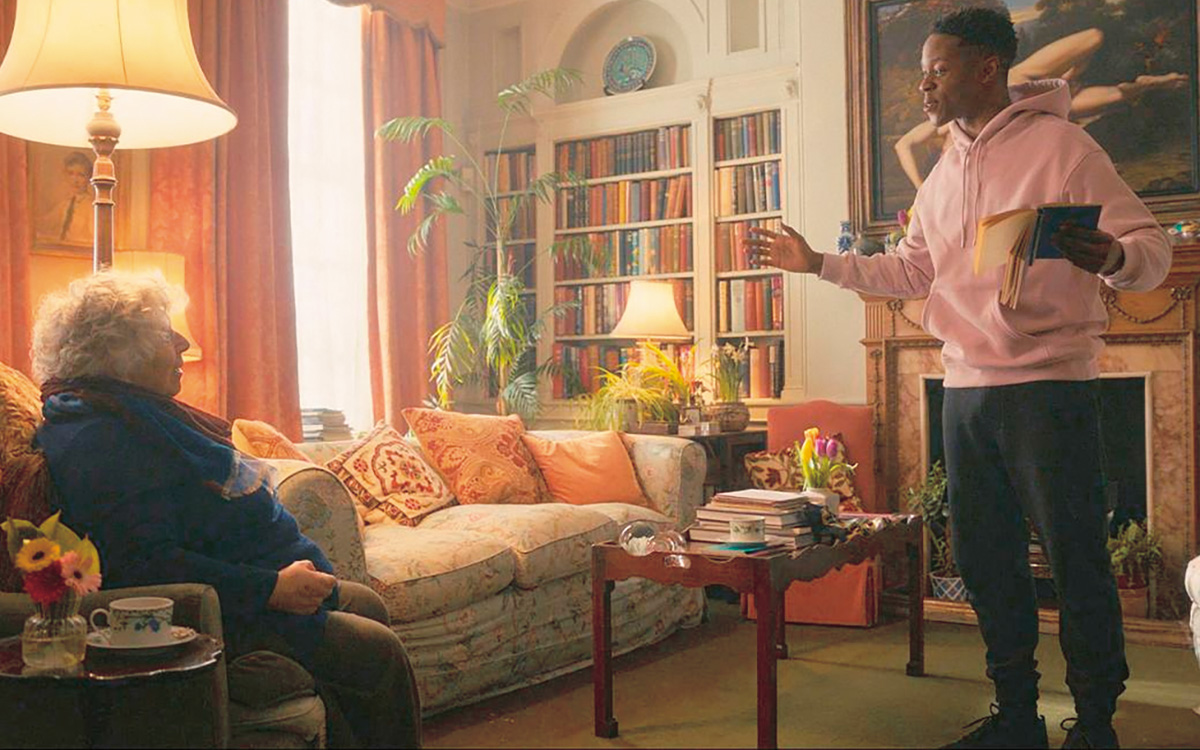
On the surface, the premise is deceptively simple. Dorothy, played with razor-sharp warmth and a razor sharp tongue (in typical Margolyes way) by Miriam Margolyes, is a widow whose days have narrowed into routine. Pills. Crosswords. Silence and hard to open cans of prunes. When seventeen-year-old JJ accidentally kicks a football into her garden, an unlikely friendship begins.
In lesser hands, this could have tipped into sentimentality. What director Lee Knight does instead is far braver, he slows down. He trusts stillness. He lets the relationship unfold in glances and pauses rather than grand declarations.
There’s a remarkable early moment when JJ waits alone in Dorothy’s sitting room and his eyes land on François-Xavier Fabre’s The Death of Abel. It isn’t underlined or explained. No one spells out its symbolism. But what JJ sees isn’t theology or tragedy, it’s a body. A halfnaked man draped across stone, cloth barely concealing him. The camera lingers just long enough for us to understand that JJ lingers too. His gaze shifts from casual curiosity to something more charged, more internal.
In that quiet beat, the audience begins to glimpse the sexuality he hasn’t yet found the language to claim. It’s the first crack in the armour. The first sign that this story isn’t just about companionship, it’s about identity, and the dangerous intimacy of seeing yourself reflected in art before you’re ready to be seen in life. Margolyes is magnificent here. Not in a showy, awards-clip way. In a lived-in way.
Her Dorothy is sharp, mischievous, occasionally prickly, but never reduced to a symbol of loneliness. She’s specific. She’s layered. She’s still curious about the world even as the world has largely stopped noticing her. You feel decades in her silences. The emotional centre deepens when JJ discovers a copy of Bent by Martin Sherman in Dorothy’s library. For those unfamiliar, Bent is Sherman’s searing play about the persecution of gay men in Nazi Germany. That book isn’t just a prop. It’s a bridge. It signals something unspoken. A recognition. In that moment, Dorothy’s home shifts from neighbourly curiosity to sanctuary.
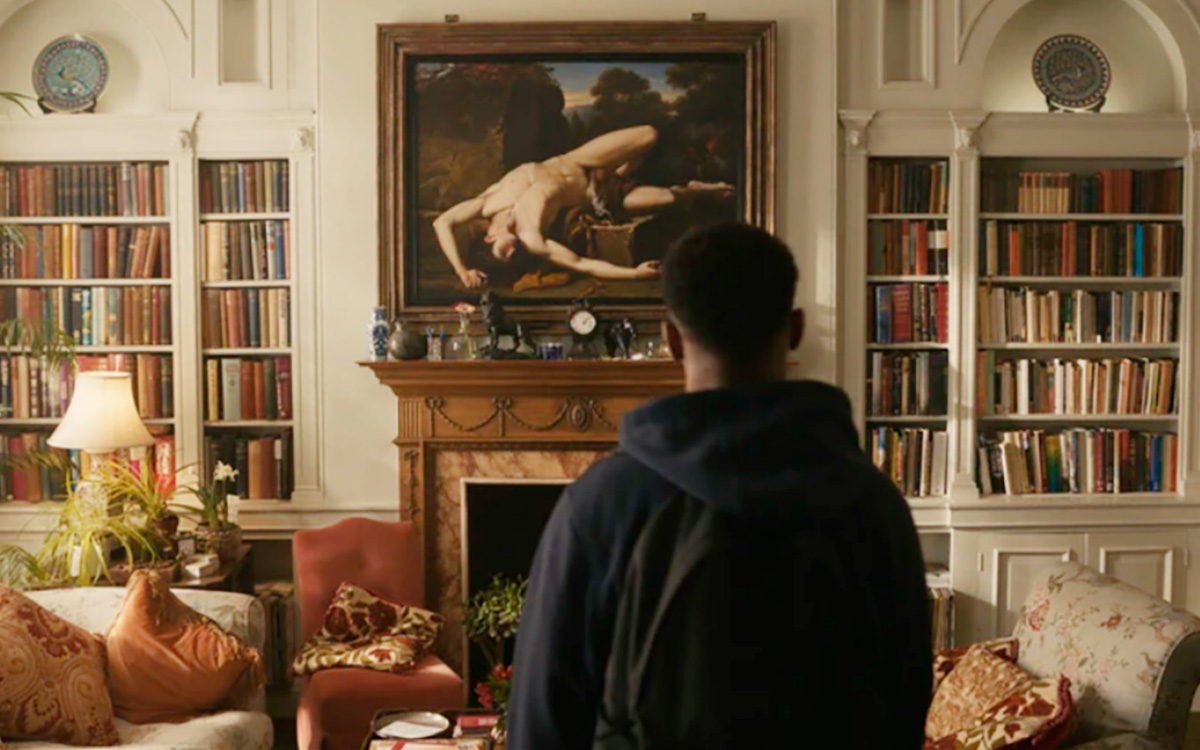
JJ (Aistair Nwachukwu) waits alone in Dorothy’s sitting room and his eyes land on François-Xavier Fabre’s The Death of Abel.
The film doesn’t announce JJ’s inner world with dramatic confession. Instead, it allows objects, a painting, a play, to speak first. That restraint is where the film earns its emotional impact. JJ, played with quiet sincerity by Alistair Nwachukwu, isn’t immature or sicklysweet. He’s observant. Guarded. Searching. His growing ease in Dorothy’s presence feels organic, not engineered.
What moves me most is that this isn’t framed as a grand mentorship speech. It’s smaller. Softer. More truthful. Dorothy doesn’t “save” JJ. She creates space. And sometimes, for a young person wrestling with identity, space is everything.
The title carries its weight lightly. “Friend of Dorothy” once functioned as a whispered password among gay men seeking safety in hostile times. The film nods to that history without turning it into a history lesson. It understands that queer survival has always been intergenerational, coded signals passed quietly from one era to the next.
At twenty-two minutes, A Friend of Dorothy feels complete. It’s gentle without being soft. Political without being preachy. Emotional without manipulation. It trusts the audience to notice the painting on the wall. The book on the shelf. The pause before a truth is spoken.
Once, “friend of Dorothy” was a question asked in shadows. Now it’s the title of an Oscarnominated short film. There’s something beautifully full circle about that.
And maybe that’s the point. A Friend of Dorothy can be seen on Disney+.
A Friend of Dorothy is produced through Knight’s Filthy Gorgeous Productions. The producers are James Dean, Scottie Fotré and Max Marlow.


